 aDSC_0860
 Photography is always easier when there is plenty of light and the conditions are ideal. But, as you may have experienced yourself, lighting conditions aren't always as we would like them to be when we arrive at a venue, and so it is essential that we work with the available light as much as possible, otherwise disappointing results may (and certainly will/do) occur.
Never a fan of "flash", I only use it when I absolutely have to as it can distract the subject / cast during a performance, risk harsh shadows and produce a generally flat feel to an image, even when turned way down, used with gels, bounced or diffused. (I actually use a Gary Fong Light Sphere) which has saved the day on countless occasions at parties, wedding receptions and highly recommend this as an addition to your bag)
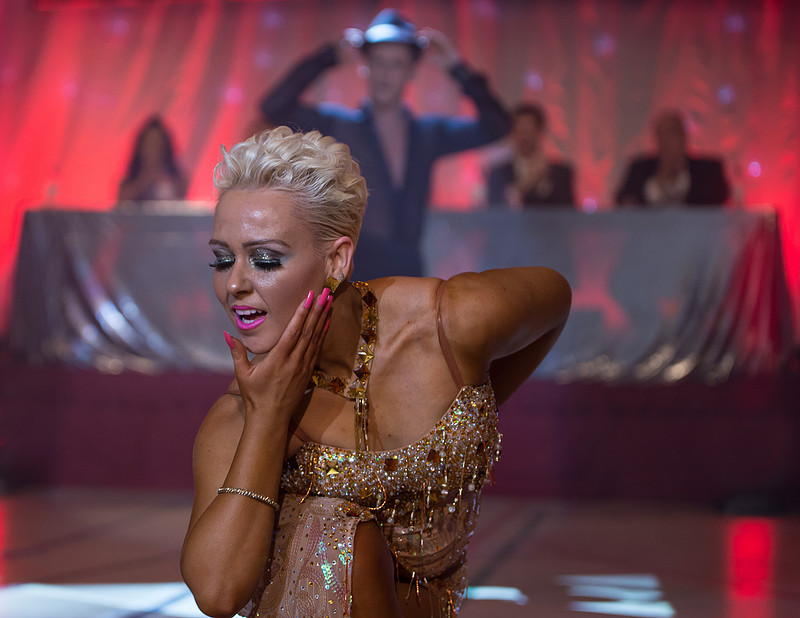
How then do we achieve good results in low light conditions when there is lots of movement on a stage, hall or arena, with details needing to be picked up and inevitably a limit on how close you might be able to get to your subject?
Flash is of course the easiest solution, dependant on proximity to your subject. However, the problem with using it is that not all situations benefit from it. Not only does it interfere with your “moment” both socially and artistically, but a flash is often unflattering and inevitably too far from your subject (especially if on stage). This is especially true for a flash that is built-in on digital cameras, (but actually true of all flash in general unless of course you have a studio based environment)and which has the effect of lighting your subject only from the front compressing the depth of an image. Compressed depth can really decrease the artistic beauty of your subject and can look somewhat washed out and clipped (over exposed), even when the flash is subdued. (I will always try to see how light falls on the subjects surroundings and hope that my mind will become more adept at knowing what "might" or "might not" work with (or without) flash.
For me, the best way to combat the problem of low light is to always Shoot RAW and always try using a high ISO setting combined with a wide aperture. (Aperture will of course affect your desired depth of field, but a balance must be considered). A higher ISO setting will appropriate more light falling on the camera's sensor, with a drawback being that there will be an increased risk of "noise" being introduced. (Noise is the background interference shown as minute speckles, which get heavier and more evident the higher the ISO used.) If ISO adjustment is a good solution for a better photo but with risk of significant 'noise', then software (such as Adobe Photoshop CC / Elements etc.) will help sharpen up the image and offer 'luminance' reductions. There is a balance however. The more you reduce noise in post processing, the smoother and less "real" the image can becomes. If the ISO is not pushed high enough, you may find camera shake will also be inadvertently introduced and affect sharpness. (Static subjects will of course always benefit from a tripod, but this is not ideal in some arena or stage photography situations as there is nearly always movement from the subject). A good rule of thumb to avoid camera shake is to never use a shutter speed lower than the focal length of the lens you are using. i.e. If you have a 70-200 Zoom lens, never use a shutter speed less than 1/70th of a second at the wide end, or 1/200th of a second at the zoom end. Vibration reduction will often help, as will holding your camera in a solid way, but use this basic rule and images will stay as sharp as possible. A drawback of course is that the "faster a lens" the more expensive the glass.
(By adjusting the ISO you will find that noise, regardless of severity is "nearly" always better for your image than camera shake and blurred images, and can actually contribute toward atmosphere and mood in an image. I always say that an under-exposed or grainy image, is better than a blurred one.
Metering is also another significant factor to consider in low light conditions. Most DSLR's have a selector switch to choose Matrix, Spot or Centre weighted metering systems. Another rule of thumb, is to try to use a Matrix metering selection to get an acceptable reading across the entire subject. When only a limited amount of light illuminates a specific patch of your subject matter, select Center weighted metering. When only a small sliver of light illuminates a tiny area of the subject, utilize the Spot metering system. Take a reading in Aperture priority mode at the aperture you are after, switch to "Manual-Mode" and keep the settings you have until the light changes again. All these can be adjusted in conjunction with the exposure compensation mode, which can make a difference to the resulting image (image still too dark, push it +1/3 EV (over-exposed), image too light then under-expose by -1/3 EV (or more).
In short, there is no magic wand or "standard setting" to be selected for all your "arena / Theatre /stage images" on the night. Constant adjustments will always be necessary, and with some degree of flexibility in "post" to make subtle changes to White Balance, Sharpness, Noise, Brightness, shadows, highlights and Luminance etc., any changing light conditions can be generally dealt with. However, gaining as much experience as you can is also key. Familiarity with certain lighting scenarios and always taking notes as to your venue, settings and lighting will also help, and by shooting RAW, you can match the images with the noted you take and learn for the next time if you are dissatisfied with a particular result.
So get out there, use Aperture Priority mode for ease and speed (switch to Manual when you can) and experiment as much as possible with the different lighting conditions, camera settings and subjects.
Groups, individuals, Arena's, Church Halls, School Gyms, Corridors, Convert Venues and Theatres with complex coloured lighting and mood effects, smoke, spotlights and blackouts, will all be big potential challenges for your next event project. "Break-a-Leg"
- Stephen Hawke -

&layout=none&ref=https://www.stephenhawkephotography.co.uk/blog/2024/3/shooting-events-in-low-light)